How to Budget One Month Ahead: The 4-Step Payday Gap System
Learn how to stop living paycheck to paycheck by budgeting one month ahead. Discover the Payday Gap solution and our unique 30-day Scrimping Sprint.
From experience
In my own journey to stop living paycheck to paycheck, I found that I was losing exactly $342 every single month to "ghost" expenses like unused gym memberships and premium app tiers I never opened. By executing a strict 30-day Scrimping Sprint, I saved an initial $1,400 seed fund that allowed me to pay my rent on the 1st using money I had earned in the previous month—a shift that instantly eliminated my mid-month financial anxiety.
The Secret to True Financial Peace: Living on Last Month's Income
Imagine waking up on the first day of the month with every single bill already covered. No more checking your bank balance before swiping your card at the grocery store, and no more stressful math on a Friday night to see if you can afford dinner out. This isn't a dream for the wealthy, it is the result of a specific method called budgeting one month ahead. By shifting your timing, you create a massive safety net that protects you from the unexpected. To get started with the fundamentals of managing your money, you should explore The Complete Budgeting System Guide: How to Take Control of Your Money, which lays the groundwork for the advanced strategy we are covering today.
The goal of this article is to move you away from the stress of timing your bills with your paychecks. When you budget one month ahead, you use the money you earned in January to pay for everything in February. This creates a psychological and financial shift that changes how you view every dollar you earn. Instead of wondering if your paycheck will land in time to cover the rent, you already have the rent sitting in your account, waiting for its turn to be spent.
This strategy is the logical next step for those who have already tried the How to Budget Every Time You Get Paid: The Paycheck Budget System Guide. While paycheck budgeting is a fantastic way to start, it still keeps you tied to the cash flow cycle of your employer. Transitioning to a month ahead system means you are no longer a slave to the calendar. You become the manager of a buffer fund that handles the timing for you.
Achieving this level of financial stability is not just about changing your habits, it is about re-engineering your relationship with time and currency. When you move from a reactive state to a proactive state, you stop worrying about the scarcity of current funds. Instead, you begin to look at your income as a reservoir that sustains your lifestyle month over month. Many people report that the moment their buffer is fully funded, their stress levels drop significantly because the uncertainty of a late paycheck or an unexpected expense is mitigated by the safety of pre-allocated capital.
Consider the difference between a person living paycheck to paycheck and one living on the previous month's income. The former is constantly looking at the rearview mirror, checking to see if the engine will stall before the next fuel station. The latter is operating with a full tank, moving forward with confidence and clarity. This mindset shift is the cornerstone of true personal financial success.
What is a Payday Gap and Why Is It Hurting You?
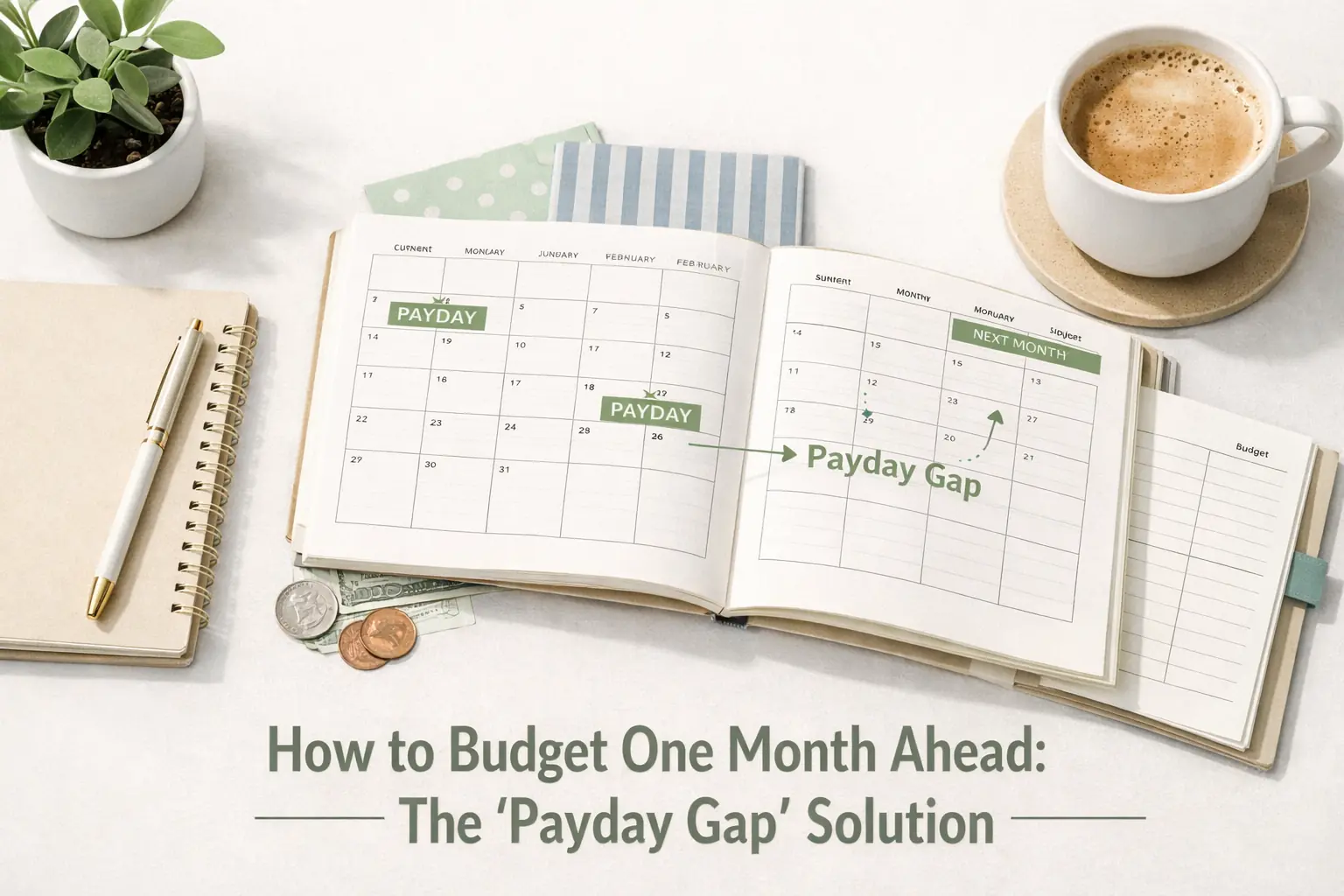
The payday gap is the period of time between when a bill is due and when your next paycheck arrives. For most people, this gap is a source of constant anxiety. If a utility bill is due on the 15th but you do not get paid until the 17th, you are forced to use credit cards or dip into savings just to stay afloat for 48 hours. This constant shuffling of money is what keeps people stuck in the cycle of breaking the paycheck cycle without ever actually succeeding.
In practice, the payday gap is a symptom of living on current income. When you live this way, your age of money is very low, usually only a few days. This means the dollar you spend today was earned just a few days ago. By budgeting one month ahead, you increase the age of your money to 30 days or more. This creates financial peace because even if a paycheck is delayed by a week, it does not affect your ability to pay your bills today. You are effectively living in the future, financially speaking.
Many financial experts argue that the payday gap is the single most destructive force in personal finance. It forces individuals into high-interest debt, such as payday loans or credit card balance carries, simply to bridge a timing issue. By eliminating this gap, you stop paying for the privilege of being late and start keeping that money in your pocket where it belongs.
Furthermore, the mental tax of living paycheck to paycheck is often overlooked. When you are constantly checking your balance and calculating if a purchase is feasible right this second, you are occupying valuable mental bandwidth that could be used for career advancement, personal development, or time with your family. Financial freedom is not just about the numbers in your bank account, it is about the silence in your mind when you don't have to worry about your basic survival needs.
Imagine the relief of knowing that even if you lost your job today, you would have a full month of runway before you had to scramble for resources. That peace of mind is worth more than any impulse purchase. It changes your decision-making process from "can I afford this right now" to "does this purchase align with my long-term financial goals." This shift in perspective is the true magic of the month ahead method.
The Scrimping Sprint: A Unique Way to Find Your Buffer
What most guides miss is that saving an entire month of expenses is hard when you are already stretched thin. To solve this, we recommend a 30-day Scrimping Sprint. This is a one-time, aggressive month where you cut every non-essential cost to the bone. This is not a permanent lifestyle change, it is a focused burst of energy to build a one month buffer. During this month, you might cancel every subscription, eat only from your pantry, and skip all entertainment. The goal is to find the initial seed money that jumpstarts your transition.
During a Scrimping Sprint, you are essentially gamifying your frugality. You look for ways to maximize your savings rate in a short window of time. For instance, you could participate in a "no-spend" challenge where you only purchase absolute essentials like groceries and fuel. You might also look for items around your home that you no longer need and sell them on local marketplaces to generate immediate cash for your buffer account.
Another effective technique during the sprint is to perform a deep dive into your recurring subscriptions. Often, we are paying for streaming services, gym memberships, or app subscriptions that we rarely use. By auditing these expenses during your sprint, you can redirect those funds directly into your buffer. Remember, this is only for one month. Once you have built your momentum, you can re-evaluate which luxuries you want to bring back, provided they fit within your new, more stable budget.
The psychological benefit of the Scrimping Sprint is that it proves to you that you have control over your spending. It demonstrates that you can sacrifice short-term pleasure for a long-term gain. This realization builds confidence, which is an essential ingredient for maintaining a long-term budget. You learn that your money is a tool, and you are the one deciding how it is used.
How to Build a One Month Buffer: A Step-by-Step Guide
- Calculate Your Monthly Baseline: Look at your spending from the last three months. Add up your rent, utilities, groceries, and debt payments. This total is the amount you need to save for next month's expenses. Do not include vacations or luxury items yet, just the essentials.
- Set Up a Transition Account: Open a separate savings account specifically for your buffer. This keeps the money out of sight so you are not tempted to spend it on current needs. Every time you find extra money during your Scrimping Sprint, move it here immediately.
- Redirect Your Windfalls: Use tax refunds, work bonuses, or birthday cash to fill this account. Many people find they can transition to month ahead budgeting much faster by using one large chunk of money rather than small amounts over time.
- The Half-Month Milestone: Once you have saved half of your monthly baseline, you will start to feel the pressure lift. This is where you can begin to align your savings goals with your new, calmer schedule.
The Payday Gap Formula: Calculating Your Freedom Date
To know exactly when you will be one month ahead, use this simple calculation. Take your total monthly expenses and subtract your current buffer savings. Divide that number by the amount you can realistically save each month. For example, if you need $3,000 to be a month ahead and you have $500 saved, you need $2,500 more. If you save $250 a month, you will be fully transitioned in 10 months. This clarity helps you stay motivated during the transition to month ahead budgeting.
The Transition: Moving from Paycheck to Month Ahead
The actual move can be confusing. You might wonder: "If I have the money saved, when do I actually start using it?" The best way to do this is to pick a start date, usually the first of a new month. On that day, you take the full amount of your buffer and move it into your checking account. All the paychecks you receive during that month are then sent directly to your buffer account to be used for the following month.
This creates a permanent cash flow cycle where you are always using "old" money. To make this work, you must have a clear budget categories list to ensure you are not missing any hidden costs. You can find a comprehensive list at 75+ Budget Categories List: Every Category You Need to Master Your Money to help you identify every possible expense before you make the leap.
What Most People Get Wrong
Most people try to jump into this without a plan for sinking funds. If you are only saving for your regular bills but forget about the annual car registration or the semi-annual insurance premium, your buffer will quickly disappear. You need to treat those irregular costs as monthly expenses. To learn more about this, check out Sinking Funds Explained: The Ultimate Method to Budget for Irregular Expenses. By including these in your monthly baseline, you ensure your one-month-ahead status is sustainable for the long term.
Another common oversight is failing to adjust for inflation. Over time, your cost of living will likely rise. Your buffer amount should not be a static number. Re-evaluate your baseline every six months to ensure that your buffer is still sufficient to cover an entire month of your current expenses. If your living costs go up by 5% due to inflation, your buffer should grow by a proportional amount.
Common Mistakes to Avoid
- Using the Buffer for Emergencies: Your one-month buffer is not an emergency fund. If your car breaks down, you should use your separate emergency savings, not the money meant for next month's rent. If you dip into the buffer, you fall back into the paycheck cycle immediately.
- Ignoring Small Expenses: Subscriptions and small daily habits can add up to hundreds of dollars. If these are not accounted for in your baseline, you will find yourself short at the end of the month.
- Losing Track of Spending: Just because you have the money upfront does not mean you can stop tracking. If you spend too much in the first week, you will still struggle. For tips on staying on top of your numbers, see How to Track Your Spending: The Simple System That Shows Where Your Money Goes.
- Giving Up Too Soon: The Scrimping Sprint is meant to be hard. It is a 30-day challenge, not a forever sentence. If you slip up, just reset and keep going.
Tools to Help You Stay Ahead
You do not need fancy software to budget one month ahead, but certain tools make it easier. A simple spreadsheet or even a dedicated notebook can work. The most important tool is a calendar. Marking your "Freedom Date" on a physical calendar gives you a visual goal to work toward. For official guidance on basic money management, you can always visit https://www.consumerfinance.gov/consumer-tools/budget/ for government-backed financial tips.
Another helpful tool is a digital banking app that allows you to create "buckets" or "vaults." This allows you to visually separate your "Next Month's Money" from "This Month's Money" even if they are in the same bank account. Keeping these piles of cash mentally separate is the key to preventing accidental overspending.
In addition to digital tools, consider the power of automation. Once your system is up and running, you can set up automatic transfers from your checking account to your savings account on payday. This "pay yourself first" mentality ensures that you are consistently reinforcing your buffer. Automation reduces the friction of decision-making, which is one of the most common reasons people fail to stick with a budget.
Finally, remember that the goal is not perfection, but progress. If you have a month where you fall slightly short, don't throw away the entire system. Instead, analyze why the shortfall happened and make a plan to adjust your next month's budget. Consistent, incremental improvements will always beat a one-time, unsustainable surge of effort followed by burnout.
Conclusion: The Freedom of a 30-Day Buffer
Budgeting one month ahead is more than just a financial tactic, it is a lifestyle shift. It removes the panic of the payday gap and gives you a level of financial peace that is hard to describe until you feel it. By following the scrimping sprint and methodically building your buffer fund, you can stop reacting to your finances and start directing them. The path from the paycheck cycle to the month ahead system takes time, but the reward is a life where money is a tool for your goals rather than a source of your stress.
Think about the future version of yourself. What would they say if they could thank you for making this change today? They would likely thank you for the sleep you gained, the arguments you avoided, and the opportunities you were able to pursue because you weren't anchored by the fear of an empty bank account. Start your journey today, one dollar at a time, and reclaim your financial life.
Frequently Asked Questions
What is the payday gap?
The payday gap is the stressful time between when a bill is due and when your next paycheck arrives. Being one month ahead eliminates this by ensuring you already have the money before the month starts.
How is a buffer fund different from an emergency fund?
A buffer fund is specifically for planned, upcoming monthly expenses. An emergency fund is for unplanned events like medical bills or job loss. You need both to be truly secure.
How long does it take to get one month ahead?
It varies based on your income and expenses. Most people can achieve this in 4 to 10 months by consistently saving a portion of every paycheck or using a Scrimping Sprint.
Can I budget one month ahead if I have debt?
Yes. While paying off debt is important, having a one-month buffer prevents you from taking on new debt when timing issues occur, making your debt payoff plan more stable.
What happens if I have an expensive month?
If you have a month with higher expenses, you may need to dip into your buffer. However, you should aim to refill that buffer as quickly as possible to stay on the month-ahead schedule.